

Restaurant Staff Onboarding Checklist
A practical onboarding checklist for new restaurant staff: paperwork before day one, the first shift, week one training, a buddy, check-ins and a 30 day review.
Updated 8 min read
On this page
Key takeaways
- Good onboarding starts before day one: paperwork, a welcome message and a rota that is already built.
- In the UK a written statement of employment particulars is due on the first day, and right to work checks must be made before employing someone.
- A buddy, a short checklist and three planned check-ins (day one, week one, day thirty) beat a long handbook.
- Cover safety first: allergens, food hygiene, first aid and fire exits, then the job itself, then the culture.
In short: make the first week deliberate. Do the paperwork before day one, give new starters a named buddy and a one page checklist, teach safety before speed, and plan three check-ins: end of the first day, end of the first week and around day thirty. Write what you do once and reuse it.
About 8 minutes to read. General information, not legal advice. Employment rules differ by country: check your local authority.
The first week sets the pattern. A new server who is told "just follow Sam" and given a tray learns the habits of whoever they follow, good or bad, and decides within days whether this is a place worth staying. A new starter who gets a clear plan, a name for each question and a kind check-in at the end of the first shift is more likely to be productive faster and to stay. Hiring is expensive; onboarding is the cheapest way to protect that investment. See staff retention and hiring restaurant staff.
This checklist is built for a restaurant, café or takeaway, from five people to fifty.
Before the offer is accepted
- Be clear about the job. Role, hours, pay, tips and service charge policy, probation, uniform and where the work is.
- Be honest about the pace and the hard parts. A realistic preview is kinder than a surprise.
- Check the right to work where the law requires it. In the UK, the Home Office guidance for employers says to check a person's right to work before employing them, and its current guide covers what a check is, how to do it, when initial and follow up checks happen and which documents are acceptable for a manual check. Read the current version on GOV.UK and follow it exactly.
Before day one
- Send the written terms. In the UK, GOV.UK says the principal written statement must be given on the first day of employment, and covers employees and workers. It must include, among other things: the employer's name, the person's name, job title or description, start date, pay and how often it is paid, hours and days of work and whether they may vary, holiday entitlement, work location, expected duration or end date for a fixed term, probation conditions, other benefits and any obligatory training. GOV.UK says some further information (sick pay and procedures, other paid leave and notice periods) must be given on day one, in the statement or in another document the person can easily reach, and the wider statement (pensions, collective agreements, non-compulsory training, disciplinary and grievance procedures) within two months. The statement is not itself a contract. Changes must be notified within one month. Check the current GOV.UK page and, if in doubt, a qualified adviser. See employment contracts basics.
- Collect what you legitimately need for payroll and tax in the format your country requires, and tell the new person how you will use their data.
- Build the first shifts into the rota before they arrive. Choose a quieter shift, pair them with the buddy, and share the rota in the tool you use. DineHarbor's team and shifts lets you plan shifts and share them with the team.
- Send a welcome message: where to go, who to ask for, what to wear, what to bring, what time to arrive, and a phone number.
- Prepare the kit: uniform, apron, name badge, locker, a login for the till or ordering system with the right role, and a seat at the pre service meal if you have one. See shifts and permissions.
- Brief the team. Tell them who is joining, in which role and who the buddy is.
Day one
Keep the first day short and human. Use this order:
- Welcome and introductions. Name the people and roles. Give a tour including toilets, staff room, storeroom, back door and where to put bags.
- Safety first. Show fire exits and the assembly point, the first aid kit and the appointed person, the emergency numbers and the plan if someone is ill. HSE guidance for Great Britain says employers must tell staff about first aid arrangements, and GOV.UK says the responsible person must give staff fire safety information, instruction and training. See first aid and fire safety.
- Food safety and allergens. A short introduction to hygiene, handwashing, uniform rules, illness reporting and the allergen rules before they touch food or talk to a guest. Details in allergen training for staff and food safety training.
- Shadow the buddy for part of the shift, with an easy job to do: setting tables, learning the menu, preparing a simple station.
- A real meal or a tasting of the menu, with notes on what is in each dish.
- A five minute check-in at the end: how did it go, what was confusing, what do you need for tomorrow?
Week one
Plan the week so the person is not left to guess.
| Day | Front of house | Kitchen |
|---|---|---|
| 1 | Tour, safety, menu tasting, shadow | Tour, safety, hygiene, shadow a station |
| 2 | Till or order system, menu knowledge | Prep tasks with a recipe card |
| 3 | Take orders with the buddy, allergy routine | Cook simple items under supervision |
| 4 | Carry and serve, handle payments | Take a section of prep alone |
| 5 | Run a small section with the buddy close | Run a station with checks |
Keep a one page training tracker with the skills in the left column and three columns: shown, practised, signed off. The buddy and the new starter both sign.
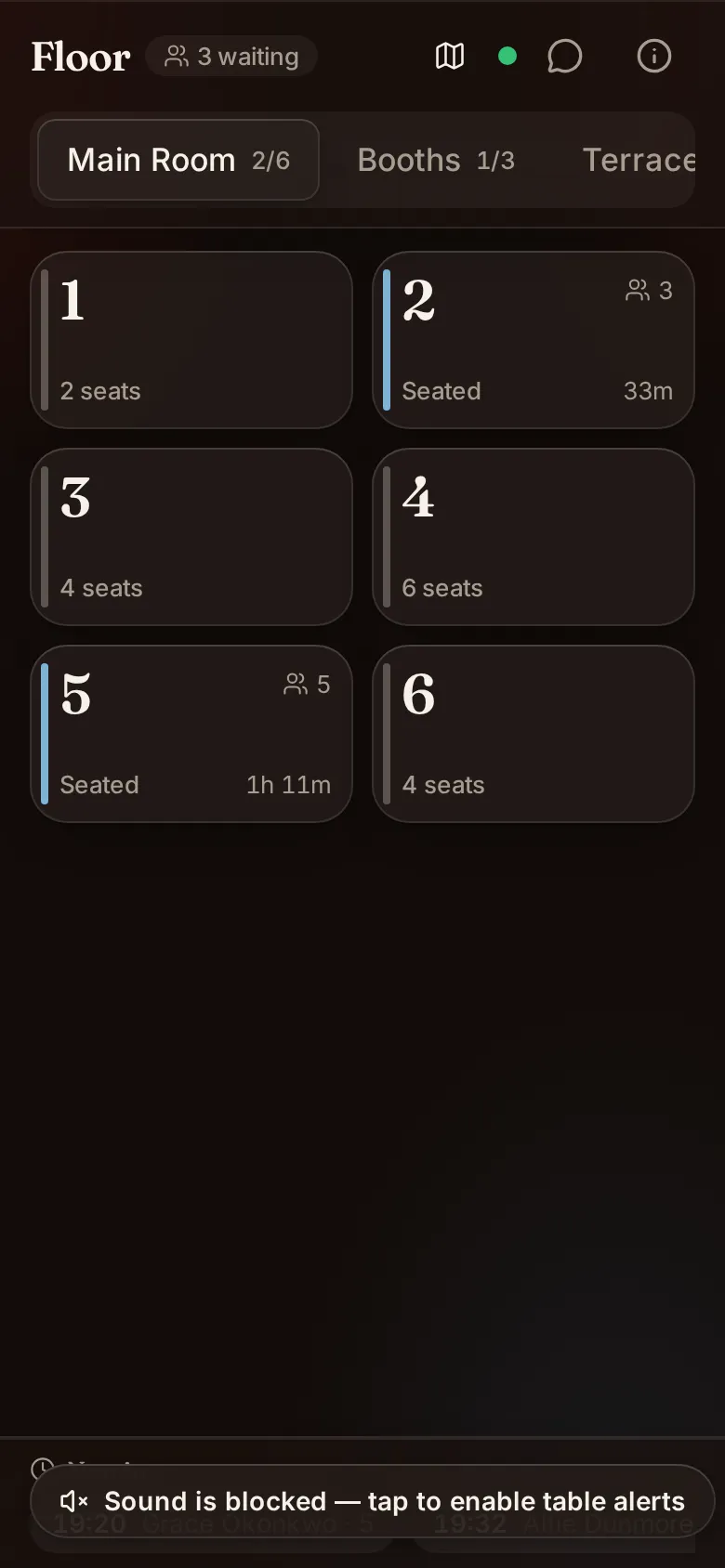
Use the tools you really use: if your front of house takes orders on a handheld, let the new person practise on a training order before they use it in service. DineHarbor's waiter handheld is one example of a tool new servers can learn on.
The buddy system
A buddy turns "somebody will show you" into a plan.
- Choose well. A patient person who does the job well and likes people, not simply the person with the most free time.
- Give them time. The buddy needs a lighter section for the first shifts, or the learning is squeezed into the gaps.
- Give them a script. The checklist, the allergy routine and the five things every new person must learn this week.
- Say thank you. Consider a small reward or recognition. Being a buddy is a step towards leading others.
- Ask the new starter how the buddy is doing, quietly.
The first thirty days
Schedule three check-ins and put them in the diary on day one:
- End of week one (fifteen minutes): what is going well, what is hard, are the hours right, anything the person needs.
- Around day fifteen: progress against the tracker, feedback in both directions, a plan for the next two weeks.
- Around day thirty: a proper review. Check performance, confirm what happens at the end of probation if you have one, set goals for the next three months and ask for feedback on your onboarding.
Write a short note after each one. If the person is struggling, say so early, with specific examples and a plan. If they are doing well, say that too.
Culture and expectations
Cover the unwritten things: how the team talks to each other, how to swap shifts, how to report problems and what happens when someone is late or sick. Tell new starters what great looks like in your restaurant in three or four sentences. See great service basics.
Explain pay, tips and service charges clearly and in writing. See tips and service charges. Introduce the way the team communicates (a group chat, an app, a board) and the rule that shift swaps need a manager's approval.
Measure whether it works
- Time to a first full shift without a buddy.
- Early turnover: how many people leave in the first 30 and 90 days, and why.
- Mistakes in the first month, such as order errors, allergen incidents and accidents.
- New starter feedback, asked at day thirty.
- Buddy feedback: what was missing from the checklist.
Fix the checklist, not the person. See KPIs for a way to keep this on one page.
Common mistakes
- Starting someone on the busiest shift.
- Leaving paperwork until the second week.
- Teaching speed before safety.
- Choosing the buddy by who is free.
- No check-ins until a problem appears.
- Never updating the checklist.
- Promising pay or tips that the written terms do not say.
A checklist
- Right to work check and written terms, as the law requires.
- A welcome message and a rota ready before day one.
- Uniform, login and locker prepared.
- Day one: tour, safety, hygiene, allergens, shadow, check-in.
- A named buddy with time to teach.
- A training tracker signed off by both.
- Check-ins at week one, day fifteen and day thirty.
- Review the checklist with every new starter's feedback.
Sources
- GOV.UK, written statement of employment particulars, as of October 2026.
- GOV.UK, right to work checks: an employer's guide, the 1 October 2026 edition summary.
- HSE, first aid at work: what employers need to do.
- GOV.UK, workplace fire safety: your responsibilities.
Want rotas and roles for new starters set up in one place? Start the 30 day free trial with no card needed.
Questions and answers
What should be on a restaurant onboarding checklist?
Paperwork and legal checks, a written statement of terms, uniform and equipment, a tour with exits and first aid, food safety and allergen training, role training with a buddy, rota and communication tools, and planned check-ins.
When must I give a new UK employee a written statement?
GOV.UK says the principal statement must be given on the first day of employment, and the wider written statement within two months. It covers employees and workers. Check current GOV.UK guidance.
When do I do a right to work check in the UK?
The Home Office guidance says employers check people's right to work before employing them. The current guide explains how, which documents are acceptable and when follow up checks are needed.
How long should onboarding last?
Plan the first day, the first week and a review at about thirty days. Many roles need longer to reach full speed, so set clear targets for each stage.
What is a buddy system?
A named colleague who shows the new starter the job, answers small questions and gives quick feedback in the first shifts. Choose someone patient and good at the job, and give them time for it.
See it in DineHarbor
About the author
Editorial team
The DineHarbor team writes this blog for restaurant owners and managers. Every article is checked against the product before it is published, so what we describe is what the software does.
All articles by DineHarbor team